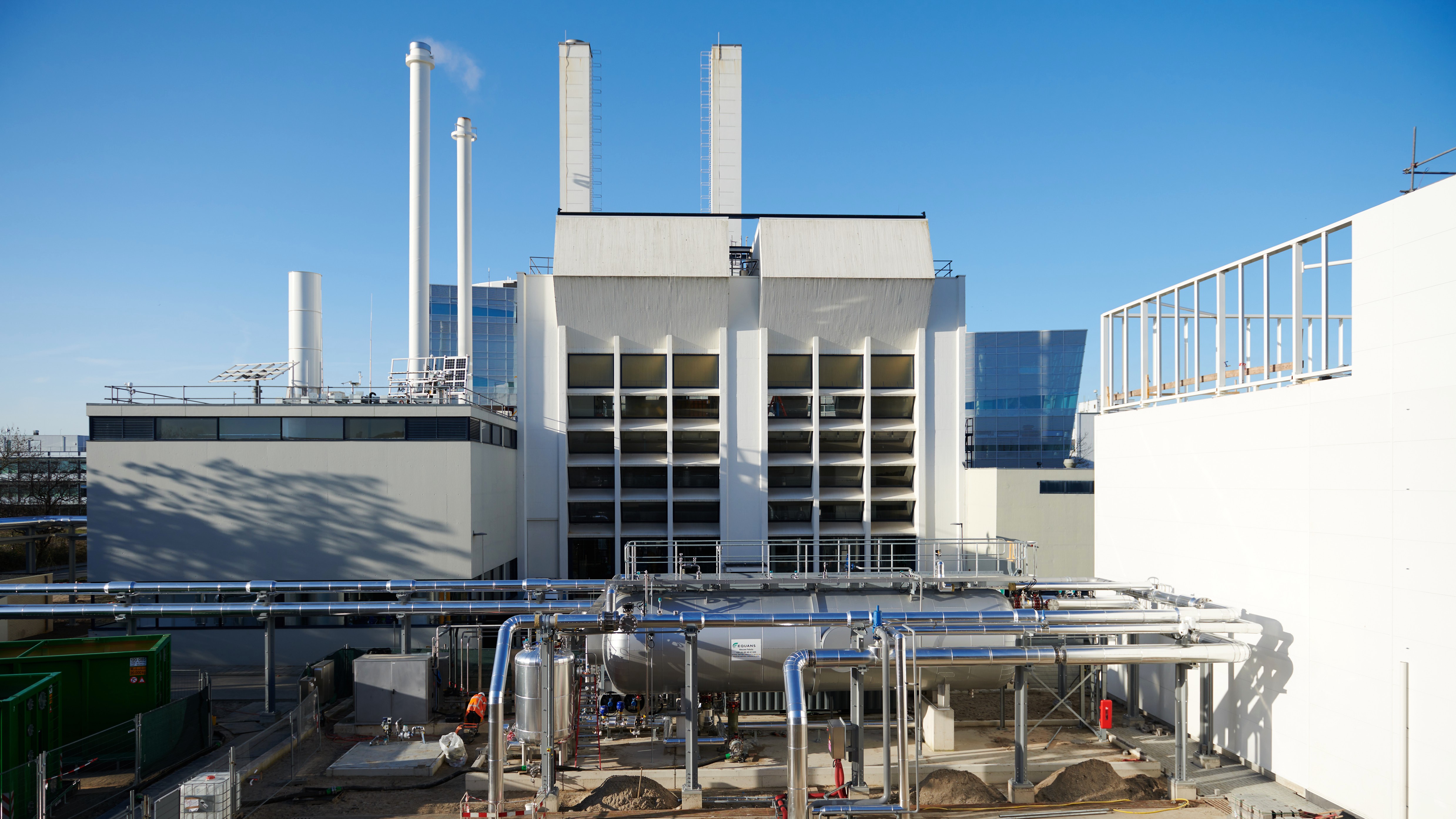

Geothermie Delft achieves significant natural gas savings and CO2 reductions on the TU Delft Campus within its first three weeks of operation.
The results from GTD’s initial weeks of operation are in, and the impact of our geothermal source on the TU Delft Campus is already clear. Between 26 February and 19 March, gas consumption dropped drastically.
TU Delft’s energy department calculated the following:
"Thanks to the deployment of geothermal energy, gas consumption at the combined heat and power (CHP) plant fell in the first three weeks from 441,000 m³ in 2025 to 141,000 m³ in 2026."
Direct natural gas savings: A reduction in natural gas consumption of 300,000 m³ in just three weeks (-68%). This three-week saving is equivalent to the annual natural gas consumption of more than 200 households.
Adjusted results: Even after adjusting for outdoor temperatures (heating degree days), the savings amount to 56% compared to last year, and as much as 62% compared to 2024.
Environmental impact: This shift in the energy mix resulted in a reduction in CO2 emissions (direct emissions) of over 500 tonnes.
Extracting heat also requires electricity (green electricity). Below is an overview of the energy required for the production and injection pumps to bring the warm water up and return it to the ground.
The results from this start-up phase show that the energy balance is exceptionally positive:
100% Green electricity: The pumps run entirely on renewably generated electricity.
High efficiency (COP of ~20): During peak moments in the first two months, Geothermie Delft delivered 7 MWth of sustainable heat. To achieve this, the pumps required an average electrical capacity of just 0.35 MWe (350 kW).
Minimum input, maximum output: In the first two months, the energy consumed proved to be relatively tiny compared to the vast amount of heat supplied to the TU Delft Campus: a ratio of approximately 1:20.
The electricity required to pump the water up and reinject it depends on the demand for heat and the flow rate* at which the warm water is extracted and reinjected. This demand varies by the week, day, and hour.
The system is currently still in its start-up phase and undergoes continuous optimization. With a stable, higher heat supply, this efficiency is expected to improve even further in the future.
These figures confirm the effectiveness of geothermal energy as a stable and sustainable heat source for the TU Delft Campus and the Municipality of Delft. We will continue to monitor this closely.
Stay informed of our progress and follow all results via this website.
________________________________________________________________________________
* The flow rate, combined with the water temperature, determines how much heat (energy) can be extracted from the ground.
High flow rate: A large volume of water is pumped up per minute. This allows us to supply a lot of heat to the TU Delft Campus, but the pumps have to work harder (which consumes more electricity).
Low flow rate: Less water is pumped through the pipes per minute. This happens, for example, in the summer when heat demand on campus is low.