
In this section, we speak with key figures who have made a significant contribution to the development and realisation of Geothermie Delft: partners, suppliers, experts, and government bodies. Read about their experiences, motivations, and lessons learned.
________________________________________________________________________________________
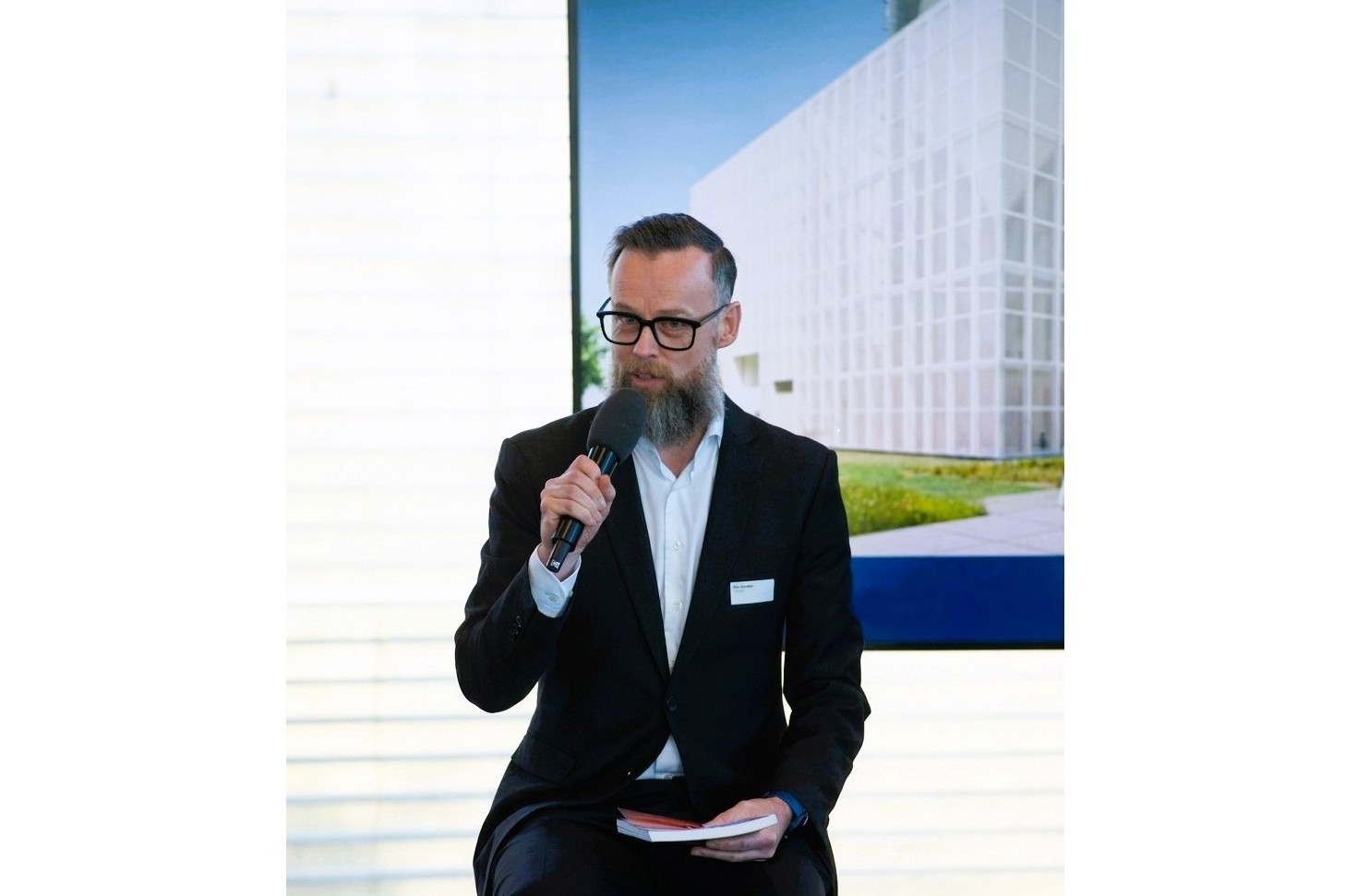
Phil Vardon is Professor of Energy Geo-Mechanics in the Department of Geoscience and Engineering at Delft University of Technology. His research is aimed at complex coupled processes in geomaterials. He focuses on how soils and geomaterials are impacted by and control various processes including temperature and fluid movement and the stresses and strains, and applies these to practical applications such as the production of geothermal energy. We sat down with Phil Vardon, to explore what his team is "seeing" and monitoring more than 2.3 kilometres beneath our feet and how this project could rewrite the playbook for the global energy transition.
In what way is the TU Delft involved in the Geothermie Delft project?
The Geothermie Delft (GTD) project is centred around the dual objectives of on the one hand providing clean sustainable and affordable energy for heating the TU Delft campus and the city of Delft and on the other providing needed scientific knowledge to the geothermal industry. The system is made of two wells – a doublet. The first well is used to extract hot water where the heat is used for heating, and the cooled down water is reinjected into the subsurface via the second well. The fact that this geothermal heating system is located on the TU Delft campus is crucial for this dual aim, because the campus and surrounding areas have a high energy need for heating and this geothermal plant also facilitates a large scale research programme. Having commenced operations in February 2026, the well is systematically monitored by an interdisciplinary team from TU Delft.
The Geothermal Delft facility sounds like an incredible setup for research. How do students and researchers actually interact with this live data?
PV: We involve researchers at every stage of their academic journey, which is fantastic for anyone looking to study at Delft and make a real impact towards a sustainable society.
People don’t come to university to stay here forever; very few become professors. Our students learn how to investigate complex problems, become experts in geothermal energy, and then head into the industry to become leaders of the energy transition.
What kind of data are you collecting from the Geothermie Delft source, and what is the equipment actually telling you about the subsurface?
PV: We are essentially trying to understand two key things. Firstly, the energetic performance of the system—how much heat we are getting, where the hot water originates, and where the cooled water goes when we return it into the deep underground layers. Secondly, we are monitoring for even the slightest signs of micro-seismicity to ensure the system remains completely safe.
To achieve this, we have installed fibre-optic measurement systems inside the wells, right where the water flows. These are glass fibres that respond to miniscule changes in temperature and acoustic waves (vibrations) during operations. We also installed specific stations around the project prior to drilling, so that we could monitor any vibrations close to surface.
Is it difficult to get a clear picture when you are working kilometres deep?
PV: It is incredibly challenging. Drilling is immensely expensive, so you cannot simply place sensors everywhere you want. But we did alongside the well. Furthermore, we rely on computational modelling and interpretation to fill in the blanks, linking simulation results and monitoring data where we have it.
During the drilling phase, we also used well logging tools—lowering advanced equipment down the borehole to capture snapshots of the immediate surroundings. This gave us all sorts of data such as how much clay there is in different places, how much space there is for water to flow through the rock, how much the rock can deform and direct images of the borehole, allowing us to map natural fractures in the rock. During the drilling, we also took physical rock samples back to the lab, including fully intact samples known as cores. While other projects have used only fibre optics before, combining all these data points with lab tests in one single project is entirely unique.
How does all this data translate into better, more efficient heat production for the future?
PV: Efficiency means a few things: making a project cheaper, extending its lifespan, or using less energy to pump up the water. And on a larger scale, it means figuring out how to safely fit more geothermal projects into the same region, without them interfering with one another.
By mapping exactly how the water moves, we can determine if wells need to be spaced farther apart or if we can bring them closer together. And by monitoring how temperature changes affect rock stresses, we can predict whether faults will remain stable. This allows society to extract the maximum amount of geothermal energy from the same patch of ground, and in the safest way possible.
Wat do you need to make geothermal energy more viable?
PV: Yes, we need a specific combination of factors to make geothermal energy viable. For this you need three main ingredients. First of all the rock must be hot (which means drilling deep). Secondly it must be permeable with a decent thickness so enough water can actually flow through it. And finally you need a nearby user like a city or an industrial area, because you cannot transport heat over long distances easily.
How safe is geothermal energy?
PV: In the Netherlands, geothermal systems like ours tap into sedimentary rocks, where natural seismicity is exceptionally low. The most prominent seismicity we have detected in a similar geothermal system was so minor it was exceptionally hard to even detect.
Whenever you extract or inject fluids into the Earth, there are stress changes, which have a possibility of triggering seismic events. However, not all stress changes lead to seismic events and certainly not large ones. The real question is: can we predict the changes accurately and monitor very small events that can allow us to predict larger ones? That is precisely what our monitoring system is designed to do. We want to ensure that as the Netherlands builds more geothermal projects, they remain entirely safe.
Photo: Sander van den Bosch